

As Featured In


This content has been medically reviewed by Mr Alfie, MBBCh, MSc, FRCS Plastic Surgery, Last reviewed: September 2026.


 Trustindex verifies that the original source of the review is Google.
 Trustindex verifies that the original source of the review is Google.
 Trustindex verifies that the original source of the review is Google.
 Trustindex verifies that the original source of the review is Google.
 Trustindex verifies that the original source of the review is Google.
 Trustindex verifies that the original source of the review is Google.
 Trustindex verifies that the original source of the review is Google.
 Trustindex verifies that the original source of the review is Google.
 Trustindex verifies that the original source of the review is Google.
 Trustindex verifies that the original source of the review is Google.

Reshape Your Hairline and Facial Balance With Precision Surgery
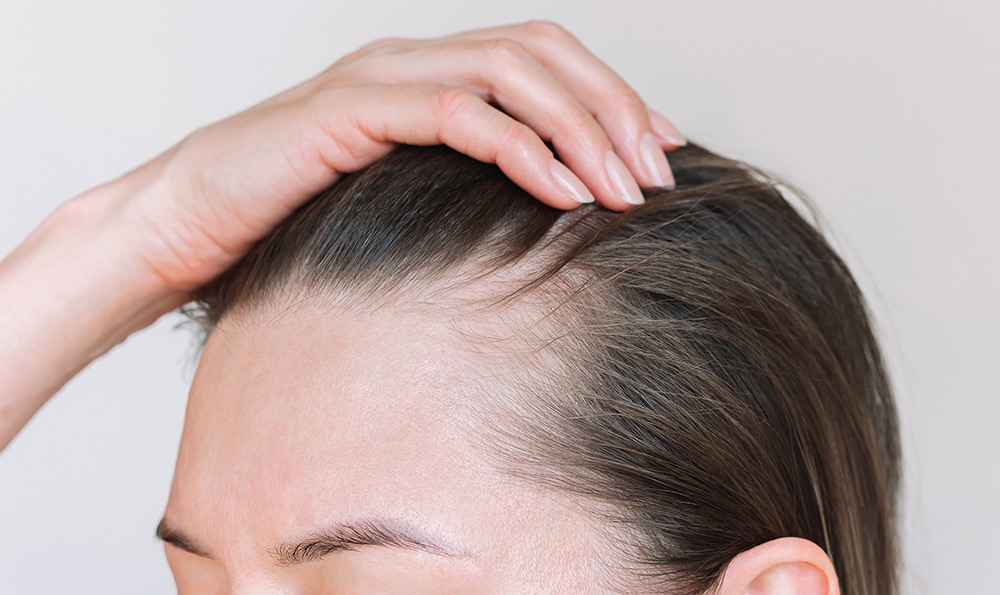
The position of the hairline plays a major role in overall facial balance. For some people, a naturally high hairline or a larger forehead can make facial proportions feel less harmonious, even when the rest of the features are well-balanced. This concern is often structural rather than related to hair loss, which means traditional hair restoration treatments are not always the right solution.
At Delta Clinics, we offer forehead reduction surgery in London for patients seeking a more proportionate appearance and a lower, more balanced hairline. Hairline-lowering surgery is designed to reduce forehead height by carefully advancing the scalp forward, creating a result that looks natural and works in harmony with your existing facial features.
What Is Forehead Reduction Surgery?
Forehead reduction surgery, also known as hairline-lowering surgery, is a facial procedure that reduces the visible height of the forehead by moving the hairline into a lower position. A section of skin is carefully removed from the upper forehead, allowing the scalp to be advanced forward and secured in a new, more proportionate position.
Unlike a hair transplant, which adds hair gradually over time, forehead reduction surgery changes the actual position of the hairline in a single procedure. This makes it particularly suitable for patients with good scalp flexibility and a naturally high hairline who want a more immediate and structural improvement in facial balance.
What Concerns Can
Hairline Lowering Surgery Address?
Forehead reduction surgery is often chosen by patients who feel their forehead height affects facial harmony or draws attention away from other features. Hairline-lowering surgery focuses on improving proportion and creating a more balanced transition between the forehead and the hairline.
Common concerns include:
- A naturally high hairline
- A larger forehead that affects facial proportions
- Facial imbalance caused by forehead height
- High hairline positioning without significant hair loss
- Dissatisfaction with forehead shape or contour
- Desire for stronger facial harmony and balance

Key Benefits of
Forehead Reduction Surgery
Forehead reduction surgery improves facial proportions by lowering the hairline and reducing excessive forehead height. Rather than changing the entire face, the procedure focuses on creating a stronger balance so your natural features feel more proportionate and harmonious.
Benefits of forehead reduction surgery include:
- Immediate reduction in visible forehead height
- Improved facial balance and proportion
- A lower, more natural-looking hairline position
- More effective structural correction than hair transplant alone
- Long-lasting results using your natural hairline
- Personalised planning based on your facial anatomy
Why Choose Delta Clinics for Forehead Reduction Surgery in London?
Forehead reduction surgery requires careful surgical judgement, as even small changes to the hairline can significantly affect overall facial balance. At Delta Clinics, every procedure is planned around facial proportion, precise hairline design and discreet healing, to create a result that looks natural rather than obviously altered.
Patients choose Delta Clinics for:

Surgeons experienced in advanced facial and hairline surgery

Detailed consultation focused on scalp flexibility and facial structure

Accredited hospital facilities with specialist surgical support

Personalised hairline planning rather than standardised measurements

Techniques designed to support discreet scar placement

Structured aftercare and long-term follow-up
What Does the Forehead Reduction Procedure Involve?
Forehead reduction surgery is performed under general anaesthesia and usually takes between two and three hours, depending on the amount of advancement required. The procedure involves removing a carefully measured strip of skin from the upper forehead near the existing hairline, allowing the scalp to be advanced forward into a lower position.
Your surgeon then secures the scalp in its new position and closes the incision with precision so the scar sits as discreetly as possible within the natural hairline. The aim is to create a softer forehead-to-hairline transition while preserving a natural appearance and long-term stability.
The Process: What to Expect
Step 1: Consultation and Assessment
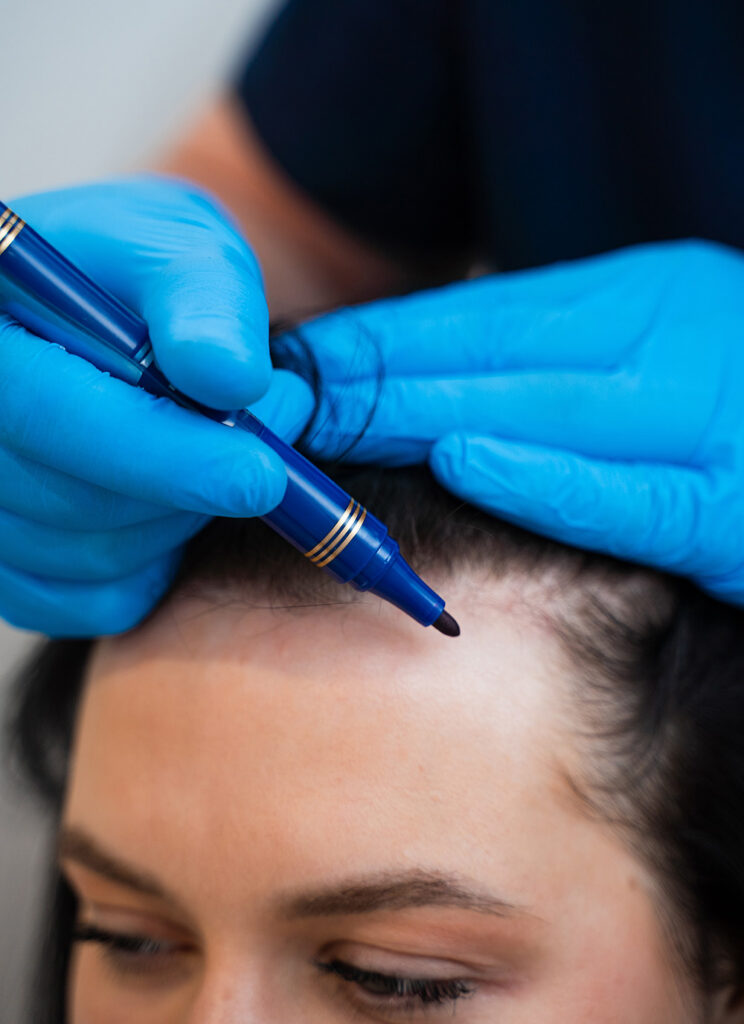
Your consultation begins with a detailed discussion about your concerns, facial proportions and treatment goals. The surgeon will assess your forehead height, scalp flexibility, hairline pattern and overall facial structure to determine whether forehead reduction surgery is the most suitable option.
Step 2: Personalised Surgical Planning
Once you decide to proceed, a tailored surgical plan is created based on your anatomy and desired outcome. This includes hairline design, the degree of advancement possible and how the incision will be positioned for the most discreet healing.
Step 3: Surgery
On the day of surgery, the procedure is carried out in a fully equipped hospital setting under general anaesthesia. The hairline is carefully advanced and secured into its new position before the incision is closed with precision to support healing and scar quality.
Step 4: Recovery and Aftercare
After surgery, you will be monitored before discharge and given detailed aftercare instructions. Follow-up appointments are arranged to review healing, remove sutures where needed and monitor how the new hairline settles over time.
Recovery Timeline After
Forehead Reduction Surgery
Recovery after forehead reduction surgery focuses on healing along the hairline, reducing forehead swelling and allowing the scalp to settle into its new position.
- First few days: Forehead tightness, swelling and mild discomfort are expected, sometimes with swelling around the upper eyelids
- 7–10 days: Sutures or staples are usually removed, and the incision begins to settle
- Weeks 2–3: Most visible swelling and bruising improve, and normal daily activities feel much more comfortable
- Weeks 4–6: Exercise and more strenuous activity gradually return as healing continues
- 3–6 months: Scar maturation progresses, and the final hairline position becomes more natural and established
Who Is a Good Candidate for Forehead Reduction Surgery?
Forehead reduction surgery is suitable for patients who want to reduce forehead height and improve facial balance through structural correction rather than hair restoration alone. Suitability depends on scalp flexibility, hairline stability and your overall treatment goals.
You may be a good candidate if:
- You have a naturally high hairline or a large forehead
- You want immediate hairline lowering rather than gradual hair restoration
- You have good scalp flexibility and stable hair density
- You are in good general health and a non-smoker
- You have realistic expectations about surgical outcomes
How Much Does Forehead Reduction Surgery Cost in London?
The cost of forehead reduction surgery in London depends on the complexity of the procedure, the amount of advancement required and whether any additional facial procedures are included. During your consultation, you will receive a clear and detailed quote covering surgery, anaesthesia, hospital fees and aftercare.
Alfie Medical Limited trading as Delta Clinics is an Appointed Representative of Chrysalis Finance Limited, which is authorised and regulated by the Financial Conduct Authority. Alfie Medical Limited is a credit broker, not a lender. The provider of a payment scheme which is not offered through or by Chrysalis Finance Limited may not be so authorised and regulated.

Take the Next Step with Delta Clinics
If you are considering forehead reduction surgery, Delta Clinics offers personalised assessment and carefully planned treatment focused on facial balance, precision and natural-looking results. Contact us today to book your consultation and explore whether hairline-lowering surgery is the right option for you.
- WhatsApp: 07498213451
- Call us: 02034410450
- Email: info@deltaclinics.co.uk
Frequently Asked Questions
Does forehead reduction surgery leave a scar?
A fine scar is expected because the incision is placed along the hairline, but it is carefully positioned to heal as discreetly as possible. As healing progresses, the scar usually becomes much less noticeable and is often hidden within the natural hairline.
How much can the hairline be lowered?
The amount of lowering depends on your scalp flexibility, existing hairline position and overall facial proportions. During consultation, your surgeon will assess how much advancement is possible while still creating a natural-looking result.
Is forehead reduction surgery better than a hair transplant?
They treat different concerns. Forehead reduction surgery lowers the actual hairline position, while a hair transplant adds hair density. If the concern is a naturally high hairline rather than thinning hair, forehead reduction surgery is often the more effective option.
Can men have forehead reduction surgery?
Yes, forehead reduction surgery can be suitable for both men and women, although hairline design and long-term planning are especially important for male patients. The approach is always tailored to facial structure and future hairline stability.
How long do forehead reduction surgery results last?
Results are long-lasting because the hairline is physically moved into a new position. Natural ageing and future hair changes can still affect appearance over time, but the structural improvement itself is permanent.
Request a Consultation
Complete the form below and we will get back to you shortly to schedule an appointment.
 Online Marketing For Doctors