

As Featured In


This content has been medically reviewed by Mr Alfie, MBBCh, MSc, FRCS Plastic Surgery, Last reviewed: September 2026.


 Trustindex verifies that the original source of the review is Google.
 Trustindex verifies that the original source of the review is Google.
 Trustindex verifies that the original source of the review is Google.
 Trustindex verifies that the original source of the review is Google.
 Trustindex verifies that the original source of the review is Google.
 Trustindex verifies that the original source of the review is Google.
 Trustindex verifies that the original source of the review is Google.
 Trustindex verifies that the original source of the review is Google.
 Trustindex verifies that the original source of the review is Google.
 Trustindex verifies that the original source of the review is Google.
Breast ptosis is the medical term for breasts that have dropped lower on the chest. It can develop gradually or become more noticeable after pregnancy, breastfeeding or weight loss. Some women are comfortable with the change; others find that their breasts no longer sit as they would like in clothing or feel that their shape no longer reflects how they see themselves.
At Delta Clinics, we look at more than the degree of drooping. Breast volume, skin quality and nipple position all affect which procedure may give you the result you want. An assessment helps us establish whether your breasts need lifting, whether you would also like more fullness, or whether reducing their size would improve comfort as well as shape.

What Is Breast Ptosis?
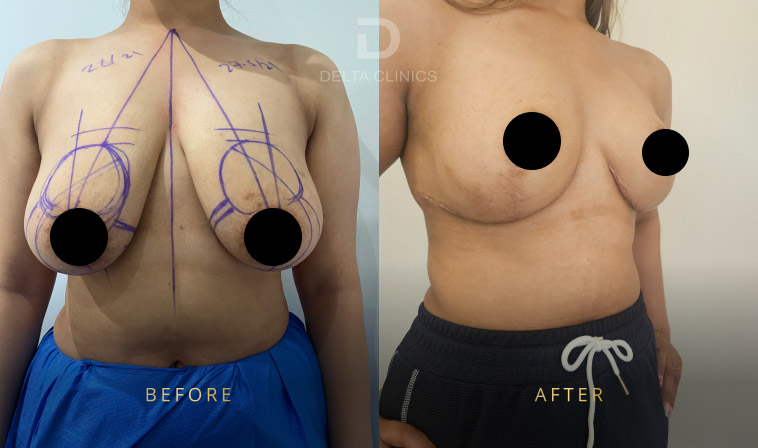
Breast ptosis occurs when breast tissue and the nipple sit lower than they previously did. The skin may have stretched, the upper part of the breast may look less full, and the nipple may sit closer to or below the breast crease, where the breast meets the chest.
The degree of ptosis varies. A breast can lose upper fullness without much change in nipple position, while more pronounced ptosis can place the nipple lower on the breast and may cause it to point downward. These differences matter when planning surgery because adding volume alone does not reliably lift a breast that has significantly dropped.
What Causes Breast Ptosis?
Breast ptosis develops as the skin and tissues supporting the breasts stretch or lose elasticity. Changes in breast size can make the drop in position more noticeable, particularly after pregnancy or weight loss. Several factors can contribute, sometimes in combination.
Factors that can contribute to breast ptosis include:
- Ageing and reduced skin elasticity
- Pregnancy and changes in breast volume
- Weight loss or repeated weight changes
- Naturally heavy breast tissue
- Genetics and differences in skin quality
- Previous breast surgery

How We Assess Breast Ptosis
at Delta Clinics
We examine where the breast tissue and nipples sit in relation to the breast crease, along with the amount of skin laxity and fullness remaining in the upper breast. We also assess breast size, symmetry, and the quality of the tissue that would need to support a new shape.
Your goals are just as important as these measurements. You may be happy with your current size and want a lift, wish to regain fullness that has been lost, or feel that your breasts are too heavy.
We discuss the likely result, incision placement and scars for each suitable approach before recommending a procedure. Plans for future pregnancy or significant weight change are relevant too, as both can affect the result over time.
Breast Ptosis Treatment Options
at Delta Clinics
The appropriate procedure depends on how far the breast and nipple have descended, the amount of existing tissue and whether you want to maintain, increase or reduce your breast volume. Following assessment, we may recommend a breast uplift, a breast uplift with implants or a breast reduction.
Breast Uplift
A breast uplift, or mastopexy, removes excess skin and reshapes the existing breast tissue so that the breasts sit higher on the chest. The nipple and areola can also be repositioned. This is generally the most direct option when you are satisfied with your breast volume but want to address drooping and improve shape.
Breast Uplift With Implants
When ptosis occurs alongside a loss of volume, a breast uplift can be combined with implants. The uplift addresses the position of the breast and nipple, while the implant adds fullness and projection. We assess whether this combined procedure is appropriate for your tissue and discuss implant size in the context of a balanced result, rather than assuming that a larger implant will correct sagging on its own.
Breast Reduction
A breast reduction may be more suitable when the breasts have dropped and also feel too large or heavy. The procedure removes breast tissue and excess skin, then reshapes the breasts and raises the nipple position. It can address both ptosis and concerns such as discomfort during activity, difficulty finding supportive clothing, or strain associated with breast weight.
Why Choose Delta Clinics for
Breast Ptosis Treatment?
Breast ptosis surgery needs to do more than raise the breasts. The new position must work with your existing tissue, your preferred size, and how much support your skin can provide. At Delta Clinics, we assess these factors together and explain the trade-offs between an uplift, an uplift with implants and a reduction, including the scars and recovery involved.
Patients choose Delta Clinics for:

Consultant plastic surgeon-led assessment and surgical planning

Experience across breast uplift, augmentation mastopexy and breast reduction

Procedure selection based on breast position, tissue quality and your preferred size

Careful planning of nipple position, symmetry and incision placement

An on-site operating theatre at our Finchley clinic

Clear explanations of the expected result and the limits of surgery

Follow-up care and guidance throughout healing
Book a Breast Ptosis Consultation
If you’re considering treatment for breast ptosis, contact Delta Clinics to discuss your concerns or book a consultation online. Our surgical team will assess your breast shape and nipple position, listen to what you would like to change and explain whether an uplift, an uplift with implants or a reduction is appropriate for you.
- WhatsApp: 07498213451
- Call: 02034410450
- Email: info@deltaclinics.co.uk
Breast Ptosis FAQs
Can breast ptosis be corrected without implants?
Yes. A breast uplift uses your existing breast tissue to raise and reshape the breasts without adding implants. Implants are considered if you also want more volume or upper-breast fullness, provided the combined procedure is suitable for you.
Can breast implants alone lift sagging breasts?
Implants add volume, but they do not reliably correct established drooping or raise a low nipple position. If the breast tissue and nipple need repositioning, an uplift may be required alongside the implant.
Can exercise or a supportive bra reverse breast ptosis?
Exercise can strengthen the muscles beneath the breasts, and a well-fitting bra can provide support while you wear it. Neither removes stretched breast skin or permanently raises breast tissue and nipples that have dropped.
Will a breast uplift change my breast size?
A breast uplift mainly changes position and shape rather than substantially increasing or reducing volume. Your breasts may look different once they have been reshaped, so we discuss the size you want to retain before surgery.
What scars does breast ptosis surgery leave?
Scars depend on the procedure and the extent of reshaping required. An uplift may leave a scar around the areola, a vertical scar towards the breast crease, and sometimes a scar along the crease; we explain the proposed pattern during your assessment. Scars usually soften with time, although they do not disappear completely.
How long does recovery take after breast ptosis surgery?
Recovery depends on whether you have an uplift, an uplift with implants, or a reduction, as well as the demands of your work and daily activities. You should plan for time away from strenuous exercise and follow the specific guidance we give you for your procedure. Swelling settles gradually, so the breast shape continues to change after the first weeks.
Can I breastfeed after surgery for breast ptosis?
Some women can breastfeed after an uplift or reduction, but surgery may affect milk production or the ability to breastfeed. The risk depends partly on the technique used and your individual anatomy. Tell us if future breastfeeding is important to you so it can be discussed when planning surgery.
Should I wait until after pregnancy to have breast ptosis surgery?
You do not necessarily have to wait, but a future pregnancy can change breast volume and stretch the skin again. If you are planning a pregnancy soon, we can discuss whether postponing surgery makes sense for your circumstances and the result you hope to maintain.
How long do breast ptosis surgery results last?
A lift or reduction can provide a lasting change in breast position, but it cannot stop ageing or prevent future changes to the skin. Pregnancy and substantial weight fluctuations can also affect breast shape. We will explain what is realistic for the procedure recommended to you.
Is surgery for breast ptosis available on the NHS?
The NHS does not routinely provide a breast uplift for appearance alone. Breast reduction may be considered under local NHS criteria when breast size causes significant symptoms, but eligibility varies by area.
Request a Consultation
Complete the form below and we will get back to you shortly to schedule an appointment.
 Online Marketing For Doctors