
How to Choose the Right Implant Size and Shape for Your Body
Last updated on April 2, 2026
A Practical Guide to Breast Implant Shapes and Sizes
Choosing between different breast implant shapes and sizes is one of the most important parts of planning breast augmentation. Shape, volume and projection all influence how implants sit on the body, how they look in clothing and how balanced the final result appears alongside natural proportions.
This guide explains the main implant shape options, how implant sizes are measured and how these factors work together. The aim is to help clarify the differences between options so decisions are based on a clear understanding rather than guesswork.
Understanding Breast Implant Shapes
Breast implant shape influences how volume is distributed within the breast and how the overall contour appears. Understanding the differences between shapes helps explain why implants of the same size can still look quite different once placed.
Round Implants
Round implants distribute volume evenly throughout the implant, which can create more fullness in the upper part of the breast. They are commonly chosen when a fuller appearance is preferred or when more projection is desired. The final look still depends on implant size, profile and existing breast tissue.
Anatomical (Teardrop) Implants
Anatomical implants are shaped to place more volume in the lower part of the breast, creating a gradual slope from top to bottom. This design is often selected when a softer contour is preferred, although the final appearance is influenced by several factors beyond shape alone.
How Shape Changes Appearance
Implant shape affects how volume sits within the breast, meaning two implants with the same volume can produce different contours. Shape also interacts with projection and body proportions, which is why breast implant shape options are usually considered alongside size rather than as a separate decision.
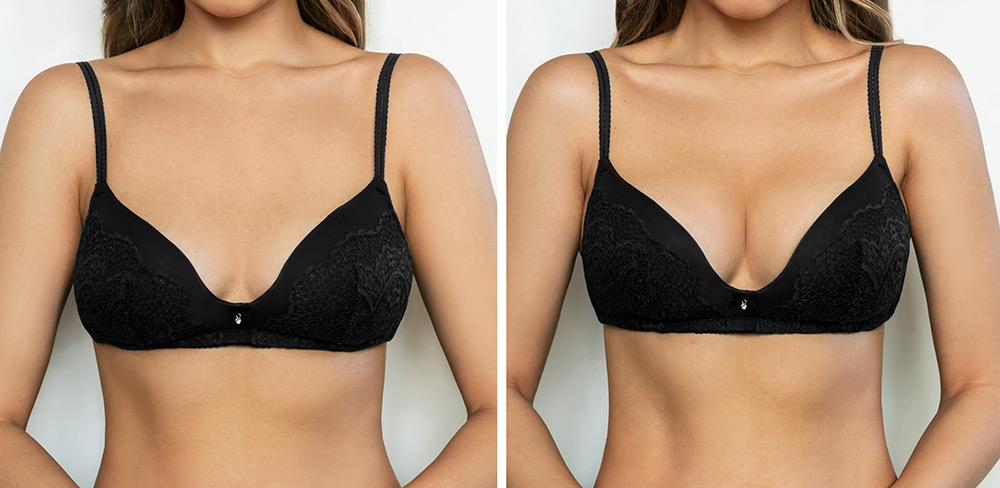
Round and anatomical implants distribute volume differently, which can change how fullness appears across the breast.
Understanding Breast Implant Sizes
Breast implant size refers to volume, but size alone does not determine how implants will look. Understanding how measurements work helps explain why implant size and body shape are closely connected.
Implant Volume and Measurements
Breast implant sizes are measured in cubic centimetres (cc), which refers to the amount of volume inside the implant. This measurement does not directly translate to bra cup size, as cup sizing varies between brands and body shapes. For this reason, implant sizing discussions usually focus on proportions rather than cup size targets.
Implant Profile and Projection
Implant profile describes how far the implant projects forward from the chest. Lower profiles tend to spread volume across a wider base, while higher profiles project more forward with less width. Implant projection and profile can significantly change appearance even when the implant volume remains the same.
Why the Same Size Looks Different on Different Bodies
The same implant size can look different from one person to another because chest width, existing tissue and overall frame influence how implants sit. This is why choosing breast implant size involves looking at proportions rather than relying on numbers alone.
How Implant Shape and Size Work Together
Breast implant shapes and sizes are closely linked, as shape influences where volume sits, and size determines how much volume is present overall. Considering both factors together helps explain why similar implants can create very different results.
For example, a smaller implant with higher projection may appear fuller from the side, while a larger implant with a moderate profile may look wider and softer. Comparing implant shape and size combinations helps build a clearer understanding of how different options influence contour and balance.
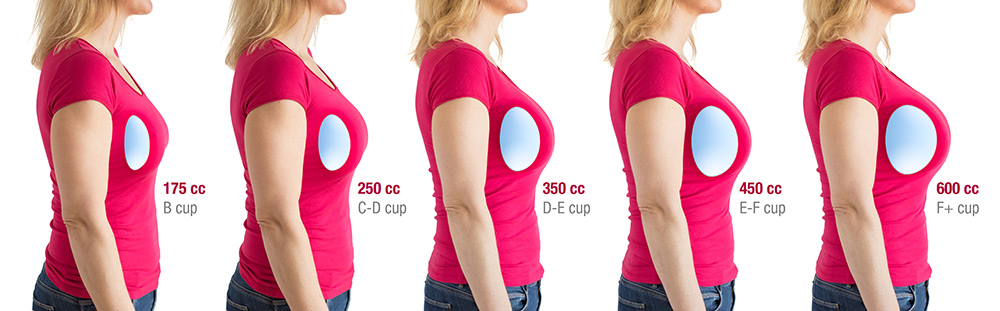
Implant size is measured by volume, not cup size, which is why results can vary between individuals.
Common Misconceptions About Breast Implant Shapes and Sizes
There are a few common assumptions about breast implant shapes and sizes that can make the decision process more confusing than it needs to be. Understanding how implants actually behave in relation to body proportions helps create clearer expectations when comparing options.
Bigger Implants Do Not Always Look Fuller
Implant size alone does not determine how full the breast appears. Projection, profile and implant shape all influence where volume sits, meaning a smaller implant with higher projection may look fuller than a larger implant with a wider base.
Cup Size Is Not a Precise Measurement
Bra cup sizes are not standardised across brands, which is why they are not used as a reliable guide for implant sizing. Discussions around breast implant sizes typically focus on volume and proportion, as these factors provide a more consistent reference point.
The Same Implant Can Look Different on Different Bodies
Body frame, chest width and existing tissue all influence how implants sit and how shape is expressed. Due to these differences, the same implant shape and size may create a different appearance from one person to another.
Trying Different Implant Shapes and Sizes Before Surgery
During planning, different breast implant shapes and sizes can often be explored using sizing tools or visual aids. This allows individuals to see how variations in volume and projection may look in relation to their own body proportions.
Trying different options helps clarify preferences and provides a clearer reference point when discussing implant size and shape. It also helps set realistic expectations about how different combinations may appear once placed.
Final Thoughts
Understanding breast implant shapes and sizes is about recognising how shape, volume and projection work together rather than viewing each factor in isolation. Small changes in any one element can influence overall appearance, which is why comparisons between options are often helpful during planning.
Taking time to understand implant shape options and size considerations allows decisions to be based on clear information and personal preference. When shape and size are considered together, the outcome is more likely to feel balanced and consistent with individual proportions.
Take the Next Step with Delta Clinics
If you are considering breast augmentation, Delta Clinics offers private consultations where you can discuss your concerns and receive clear, personalised guidance based on your individual anatomy and goals.
Contact us today to book your consultation:
WhatsApp: 07498213451
Call us: 02034410450
Email: info@deltaclinics.co.uk
FAQs
What breast implant shape looks most natural?
Breast implant shape influences how volume is distributed, which affects overall contour. Anatomical implants are designed with more lower pole fullness, while round implants distribute volume more evenly, and the final appearance depends on how the implant sits on the individual’s body.
How do breast implant shapes and sizes affect body proportions?
Breast implant shapes and sizes influence how projection, width and volume relate to the chest and overall frame. The same implant can create different visual outcomes depending on body proportions and existing breast tissue.
Does implant profile matter as much as implant size?
Implant profile plays an important role because it affects how far the implant projects from the chest. Two implants with similar volume can look quite different if their projection or profile changes.
Can the same implant size look different on different people?
Yes, implant size and shape are influenced by factors such as chest width, tissue coverage and overall body frame. This is why the same implant may appear larger or smaller depending on the individual.
How are breast implant sizes measured?
Breast implant sizes are measured in cubic centimetres (cc), which refers to the volume of the implant. This measurement is used instead of bra cup size, as cup sizing varies between brands and does not provide a consistent reference.




30 September 2026
How Much Does Liposuction Cost in the UK? What Affects the Price

23 September 2026

5 August 2026

15 July 2026

 Online Marketing For Doctors